
Something that you will realize as a new grad dentist is that patients are concerned about how their smile will look. Today tooth bleaching is one of the most widely requested Aesthetic dental treatments. Knowing this procedure inside and out will improve your own clinical practice, as well as your patient satisfaction.
Here is all that you need to know about professional tooth whitening to help you get started with confidence.
What Exactly is Tooth Bleaching?
Tooth bleaching is a chemical process of lightening the tooth colors by using whitening agents on discolored teeth. More than just removing surface debris through simple polishing, dental bleaching actually removes pigment from tooth enamel by way of oxidation.
The method addresses both internal and external stains. External stains are either from coffee, tea or tobacco. Internal discoloration occurs from trauma and aging or medications. Understanding the distinction helps you choose the good treatment plan.
How Does Tooth Bleaching Work?
Teeth whitening procedures is a fascinating but simple science.
Bleach works by oxidizing and breaking down the stain molecules. Hydrogen peroxide teeth whitening products release oxygen molecules when in contact with teeth. These molecules disrupt the chemical bonds that hold stain molecules together and penetrate the enamel surface.
Carbamide peroxide bleaching works in the same manner, but it releases hydrogen peroxide more slowly. This makes it perfect for at-home treatments where extended contact time can simply limit the strength of when concentrated.
Bleaching Techniques That Every Dentist Should Be Aware Of
In-Office Bleaching
The pros and cons of In-office vs at-home bleaching are as follows: Higher concentrations (15-40% hydrogen peroxide) agents work more quickly than at-home treatments.
The typical procedure involves:
- Protecting soft tissues with barriers
- Bleaching gel on the surfaces of teeth
- Based on some with activating by a whitening lamp or laser bleaching, and based on others without activating
- Monitoring throughout the session
Patients walk away happy since it delivers immediate results.
At-Home Professional Bleaching
The technique involves the use of custom-made bleaching trays alongside lower concentrations of gels (10–20% carbamide peroxide). Patients wear trays for certain amounts of time all over the course of a few weeks.
And this firstly natural-appearing harmony is often less sensitive to gradual approach.
Over-the-Counter Products
And while this is not part of your clinical procedure for tooth bleaching, knowing what you can find in pharmacy gives you tools to steer them back towards a professional solution when indicated.
The Step-by-Step Tooth Bleaching Process
The step by step tooth bleaching process when expertly followed is foolproof.
Pre-Treatment Assessment
To begin, start a complete patient consultation for bleaching. Look for cavities, gum disease, or nonbleaching restorations. Discuss expectations realistically.
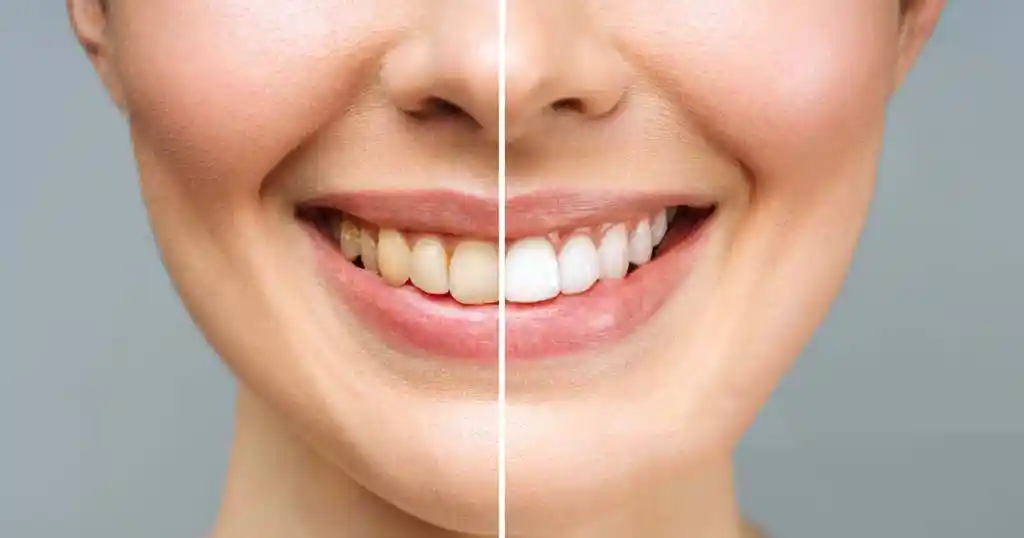
Record baseline shade using a shade guide. The following tooth shade evaluation offers tangible before-and-after image verification:
Identify Contraindications
Knowing the dental bleaching contraindications helps protect both your patients and your practice. Do not bleach on pregnant women, patients with pronounced sensitivity, or patients with extensive restorations in visible areas.
The Procedure
Clean teeth thoroughly first. Apply protective barriers to gums. By carefully putting professional whitening solutions on the surfaces of the tooth. Apply at the right moment according to product directions.
Monitor patients throughout treatment. Others find themselves temporarily uncomfortable needing to adapt.
Post-Treatment Care
Give advice about patient consultation for bleaching tips:
- Do not stain foods for 48 hours
- Use sensitivity toothpaste if needed
- Maintain good oral hygiene
- Schedule follow-up appointments
Managing Sensitivity After Tooth Bleaching
Tooth bleaching sensitivity is usually minor and reversible. Enamel tubules are temporarily opened during this oxidation, revealing dentin.
Recommend desensitizing toothpaste before treatment. Use gels of lower concentration for the sensitive patient. Shorter application times also help.
Traditionally most sensitivity resolves in 2 days. More extensive situations may require fluoride applications or other halting of exfoliation.
Common Mistakes to Avoid
The process can be rushed, especially by newer dentists. Use a right isolation and time-
Don’t promise unrealistic shade changes. They don’t turn teeth blindingly white, you go back to your natural best color.
Another mistake is not exhausting the consultation process. Successful tooth bleaching relies on a proper case selection. Not every tooth that is discolored responds the same.
Essential Materials and Equipment
However, you don’t have to spend a fortune. Better start planning your tooth bleaching materials and equipment inventory.
Basic needs include:
- Bleaching gels in various concentrations
- Protective barriers and retractors
- Quality shade guides
- Custom tray materials
- Desensitizing agents
Optional equipment: curing lights or activation lamps based on a controversial approach in the research.
Safety First: Protocols Matter
Adhere to safety protocols for dental bleaching procedures. Ignorance of appropriate isolation causes the soft tissue burn. Accurate timing prevents enamel damage.
Recent work on enamel property changes following bleaching. When utilized properly, new materials and methods are exceedingly secure.
Build Your Expertise with AADEIndia
Having an understanding of bleaching techniques in dentistry helps us with foundational knowledge. Because theory alone does not work, hands-on training turns theory into clinical confidence.
AADEIndia Dental Academy is not mere Aesthetic dentistry training, but comprehensive cosmetic dentistry training conducted by experienced practitioners who knows the pain points with which new dentist struggle. From basic tooth whitening for dentists all the way to aesthetic procedures.
You will practice real methods and you will learn case selection for successful tooth bleaching and how you will manage complications. In addition to theoretical knowledge, our faculty brings real-world experience to the classroom.
State of the art General Dentistry Courses training programs provided at AADEIndia will teach you everything you need to know to get you started or expand your portfolio of Aesthetic, Endodontics, smile designing, oral surgery and cosmetic dental services right out of dental school with results that will talk for themselves.
So, join AADEIndia for Endodontics courses with Aesthetic now and learn to create the best smile ever. Your patients (and your practice) will appreciate you for it.
FAQs
Q: How long do tooth bleaching results last?
A: With proper maintenance, professional in-office bleaching will generally last 1-3 years. Professional at-home treatments provide results that last 6 months to 1 year, compared to over-the-counter products which last between 3-6 months.
Q: Will tooth bleaching damage my teeth or gums?
A: No, if done correctly. Done with custom trays that protect gums, and the whitening agents are strong but not damaging on enamel with correct protocols.
Q: Does tooth bleaching work on crowns, veneers, or fillings?
A: Teeth whitening affects only the natural tooth structure, so any dental restorations like crowns, veneers, bridges, and fillings will not change color, creating a patchwork effect that necessitates replacement following whitening.
Q: How long does the tooth bleaching procedure take?
A: This type of whitening takes about 45-60 minutes per visit, and these types of procedures would usually require 1-3 visits to the dentist’s office. With consistent use, at-home professional tooth whitening treatments tend to deliver results within 1-2 weeks.
Q: Why do my teeth feel sensitive after bleaching?
A: Bleaching causes dentin exposure through temporary openings of enamel tubules, leading to sensitivity. This is an expected reaction that generally subsides 24–48 hours after the treatment is no longer being delivered.
Q: Can I eat and drink normally after bleaching?
A: Stay away from dark colored foods and drinks (coffee, tea, red wine, berries) for a minimum of 48 hours after treatment. These types of stains can quickly re-strain and sticky result your freshly whitened teeth.
Q: Does the light or laser actually help with bleaching?
A: Studies demonstrate that while these activation lights may create increased sensitivity, the whitening effects of high-concentration bleaching agents are not significantly enhanced as well. Most of the work is done by the gel.
Q: Is tooth bleaching safe for everyone?
A: Not everyone is a candidate. Bleaching is not for you if you are pregnant, have untreated cavities, active gum disease, have very sensitive teeth, or have large visible fillings involving the front teeth.
Q: What’s the difference between in-office and at-home bleaching?
A: In-office tooth whitening works with high concentration agents (15-40% hydrogen peroxide) to provide fast results, whereas at-home whitening works with lower concentrations (10-20% carbamide peroxide), applied over longer periods of time for gradual whitening.
Q: How can I maintain my whitening results longer?
A: Regular brushing at least twice a day, avoiding foods/drinks that stain teeth, using a straw when drinking dark beverages, quitting smoking, and getting dental cleanings as needed. Maintenance touchups every 6-12 months keep things bright.